Commercial epoxy flooring in Fayetteville, AR is a different job than a residential garage. The loads are heavier, the chemical exposure is more frequent, and the cost of downtime is real. A warehouse running forklifts needs a high-build coating system rated for rolling loads and abrasion, not a standard two-coat residential system. An auto shop dealing with motor oil, transmission fluid, and brake cleaner needs chemical resistance the floor can handle every single day. We size the coating system to the actual demands of your space — and we schedule installation to minimize the time your floor is out of service.
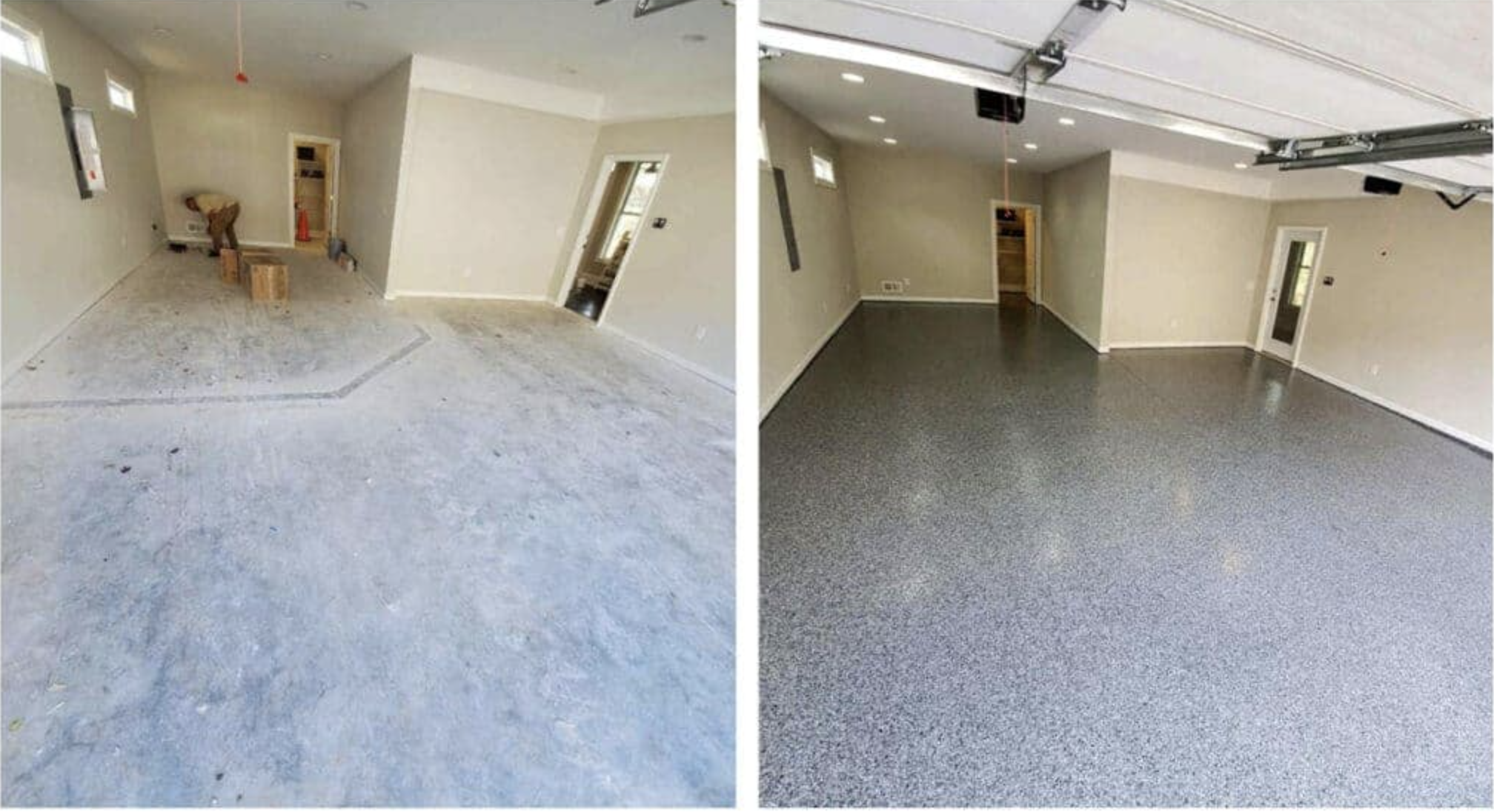
A properly installed commercial epoxy system handles daily foot traffic, forklift loads, and chemical spills without breaking down.
What Does Commercial Epoxy Flooring Involve?
The process starts the same way as any epoxy project: surface preparation. On commercial slabs, that typically means a walk-behind or ride-on diamond grinder, and sometimes shot blasting on very large floors. The goal is to open the concrete’s pores and remove any contamination — oil, old sealers, adhesive residue — so the coating bonds correctly. Proper prep on a commercial slab takes longer than on a residential one because there’s more surface area and the stakes of a delamination failure are higher.
After prep, the coating system goes down in layers. A commercial installation typically includes a penetrating primer (to seal the slab and improve adhesion), a high-build epoxy base coat, a decorative or functional broadcast layer if needed, and a polyaspartic or polyurea topcoat. Total dry film thickness on a commercial system ranges from 30 to 80 mils depending on the application, compared to 15 to 25 mils on a residential garage floor.
When Does Your Business Need a New Commercial Floor Coating?
The most common trigger we see in Fayetteville businesses is a failing existing coating — surface pitting, delamination patches, or staining that won’t clean off. These are signs that either the original coating was under-specified for the use, or the surface prep wasn’t adequate. Patching individual spots in a commercial facility rarely works for long, because the same underlying conditions that caused the first failure will cause the patch to fail too.
New construction and tenant build-outs are the other common scenario. A bare concrete slab is dusty, hard to clean, and presents a slip risk in wet conditions. Coating it before operations begin is significantly cheaper than coating around installed equipment and shelving later.
Why Do Commercial Floors Fail in NWA?
The same moisture issues that affect residential slabs in Fayetteville hit commercial floors harder. A warehouse slab is often thicker and poured directly on grade, which means it’s in constant contact with Northwest Arkansas’s moisture-retaining clay soil. If the concrete has high vapor emission rates and no moisture barrier was installed under the slab, a standard epoxy coating will eventually blister. We test moisture vapor emission on every commercial slab before specifying a system. When readings are elevated, we apply a moisture-mitigation primer rated for commercial use before any epoxy goes down.
Under-specification is the other major failure cause. A contractor who installs a residential-grade two-coat system in a space with pallet jacks or constant foot traffic will see the floor wear through in two to three years. The right system for a Fayetteville warehouse or shop floor uses a high-build base coat with a broadcast aggregate for abrasion resistance and a hard polyaspartic or polyurea topcoat. Skipping any of those layers to save money upfront costs more in the long run.
What Affects the Cost of Commercial Epoxy Flooring in Fayetteville?
Square footage is the primary driver — larger jobs have lower per-square-foot costs because setup, equipment mobilization, and minimum material orders spread across more area. The existing slab condition is the second factor; a slab with heavy oil contamination or significant surface damage requires more prep time and may need a chemical degreaser applied before grinding. The coating system itself varies in cost: a standard two-coat commercial system runs $3 to $5 per square foot, while a high-build broadcast system with quartz aggregate and a polyurea topcoat runs $5 to $8 per square foot. Moisture mitigation adds $1.50 to $3.00 per square foot on top of the base cost when required.
We provide detailed written quotes after a free walkthrough of your facility. We won’t give you a per-square-foot rate over the phone without seeing the slab, because the condition variables matter too much to estimate blind.
Epoxy vs. Polyurea: Which System Does Your Fayetteville Business Need?
The choice isn’t really epoxy versus polyurea — it’s about which coating goes in which layer of the system. For most commercial applications in Fayetteville, the right answer is a 100% solids epoxy base coat for adhesion and build, followed by a polyurea or polyaspartic topcoat for hardness, chemical resistance, and UV stability. A full polyurea system (no epoxy base) can be installed faster and returns to service same-day, which makes it attractive for businesses that can’t afford a two-day shutdown. The trade-off is less coating thickness and slightly lower bond strength on rough or contaminated slabs. We’ll recommend the right system after seeing your floor and understanding your schedule.
Frequently Asked Questions — Commercial Epoxy Flooring in Fayetteville, AR
How much does commercial epoxy flooring cost in Fayetteville, AR?
Commercial epoxy flooring in Fayetteville, AR typically runs $3 to $8 per square foot installed, depending on the existing slab condition, coating system selected, and square footage. High-build broadcast systems for heavy industrial use cost more than standard two-coat epoxy. We provide exact quotes after a free on-site walkthrough.
How long does commercial epoxy flooring take to install?
Most commercial installations in Fayetteville are completed in one to two days on-site. Polyaspartic topcoat systems can return to light foot traffic in four to six hours and full service the following morning. Large warehouses or spaces requiring significant surface remediation may take longer. We schedule jobs to minimize disruption to your operations.
What types of businesses use commercial epoxy flooring in NWA?
In the Fayetteville and Northwest Arkansas area, we coat floors in auto repair shops, auto dealerships, warehouses and distribution centers, commercial kitchens and food prep facilities, retail showrooms, fitness centers and gyms, medical and dental offices, and light manufacturing facilities. Each environment gets a system matched to its chemical exposure, traffic weight, and slip resistance needs.
Is epoxy flooring safe for commercial kitchens in Fayetteville?
Yes. Seamless epoxy and urethane cement systems are used in commercial kitchens across Northwest Arkansas because they eliminate grout lines where bacteria can collect, tolerate daily chemical cleaning, and can be installed with a high-grit non-slip profile for wet areas. The coating must be food-safe and rated for thermal shock resistance if the floor will experience hot water or steam cleaning.
How long does commercial epoxy flooring last in a Fayetteville warehouse?
A properly installed high-build epoxy system in a Fayetteville warehouse typically lasts 10 to 15 years under forklift and pallet jack traffic. Facilities with lighter foot traffic and no vehicle use can expect 15 to 20 years before a topcoat refresh is needed. Surface preparation quality and the mil thickness of the coating are the two biggest factors affecting lifespan.