Epoxy floor repair in Fayetteville almost always starts the same way: a homeowner peels back a corner of a coating that is lifting and finds clean, smooth concrete underneath. That is the whole story right there. The coating never bonded, and no amount of new product on top of it will change that. We diagnose the failure first, remove what has to come off, correct the cause, and rebuild the floor properly.
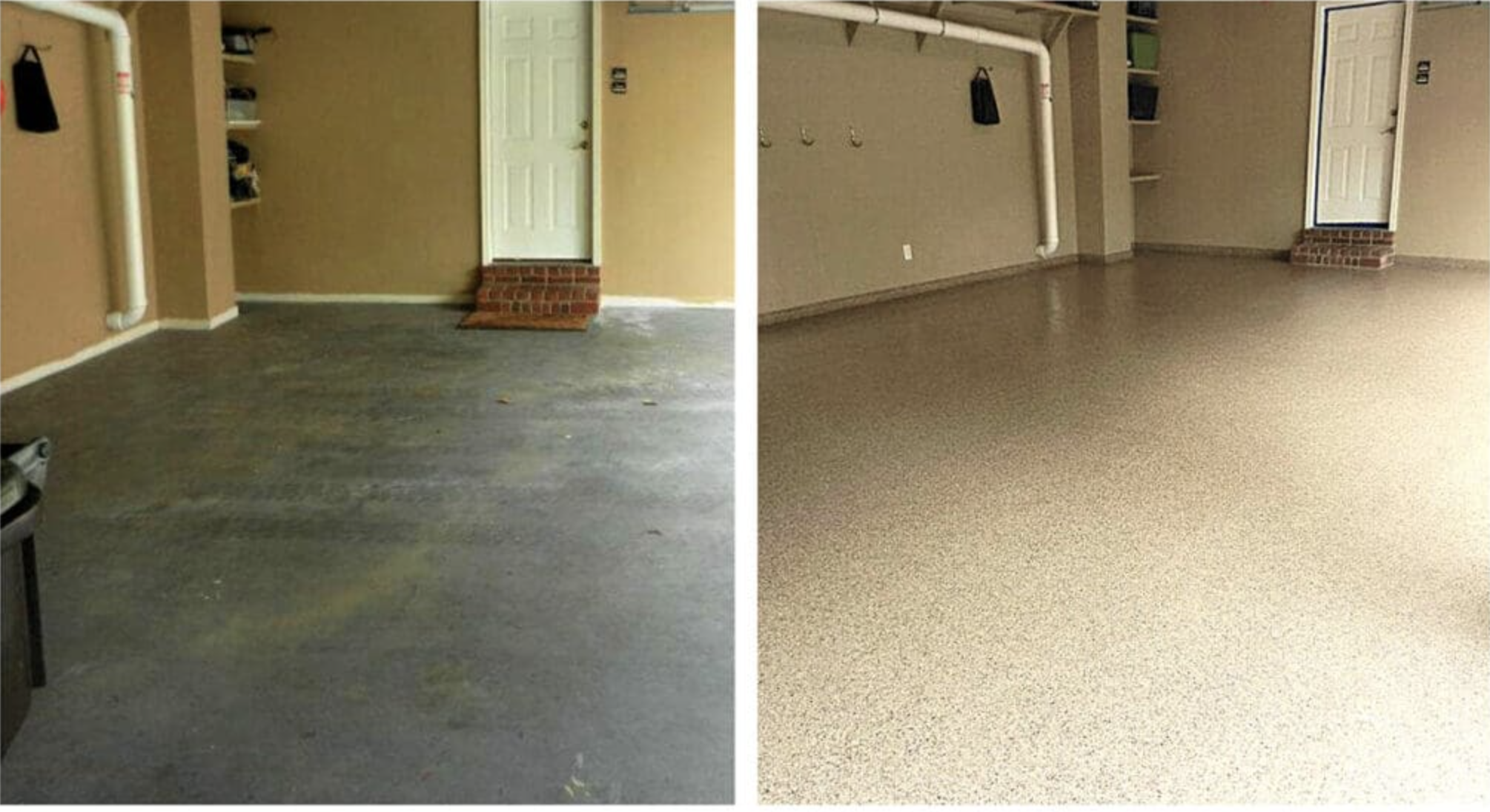
Failed coating removed, slab reground, floor rebuilt.
What Does Epoxy Floor Repair Involve?
First a walk of the floor with a scraper and a moisture meter. We tap and probe to map how much of the coating is actually loose, because that decides whether this is a spot repair or a full redo. A floor with two failing patches near the door is a different job from one that lifts wherever you push it.
If it is coming off, it comes off with diamond grinding, sometimes with a shot blaster on larger commercial slabs. Then we test the bare concrete for moisture with a calcium chloride kit or an in-slab humidity probe. Cracks get chased and filled, spalled edges rebuilt, and low spots patched.
Rebuild depends on what we found. High moisture reading means a vapor-barrier primer first. Cold shop with no heat in January means a polyurea base instead of epoxy. Then base coat, flake if you want it, and a polyaspartic topcoat.
When Does a Floor Need Repair Instead of Replacement?
Spot repair is honest when the failure is local and you know the cause — a patch by the water heater where a leak sat, a strip at the apron where UV got at it, a gouge from something heavy. We grind out the area, feather the edges, and blend a new section in. On a flake floor the repair disappears; on a solid color it will be slightly visible in raking light.
Go to full replacement when the coating lifts in more than about a quarter of the floor, when it bubbles across the middle of the slab, or when you can slide a putty knife under it anywhere you try. Those all mean the bond or the slab is the problem, not the spot.
And if the original floor was a big-box kit rolled on over an acid-etched slab, plan on full removal. Those coatings are thin and were never mechanically keyed into the concrete.
Why Do Epoxy Floors Fail in Northwest Arkansas?
Bad prep is the top cause nationally and here. Acid etching leaves residue and never profiles concrete evenly. Without diamond grinding there is no mechanical key, so the coating is essentially sitting on the slab rather than locked into it.
Moisture is second, and Fayetteville makes it worse than average. Hillside lots, Ozark limestone, and older slabs with thin or missing vapor barriers all let water vapor migrate up. It collects under a non-breathable film and lifts it. This is the one that produces bubbles in the field of the floor rather than peeling at the edges.
Third is temperature, and this one is specific to our winters. Fayetteville crosses freezing and back dozens of times between November and March. Standard epoxy wants slab temperatures around 55 to 60 degrees to cure right, and an unheated garage here spends most of the winter well below that. A coating installed too cold cures soft, stays tacky, or never reaches full hardness — then fails the following summer and everyone blames the product.
Fourth, and simplest: hot tire pickup. Tires come off the highway hot, sit on a thin or under-cured coating, soften it, and pull it up when the car moves. A properly built floor with a polyaspartic topcoat shrugs this off.
What Affects the Cost of Epoxy Floor Repair in Fayetteville?
Removal is the variable that moves the number most. Grinding off a failed coating adds $1.50 to $3.50 per square foot before any new material goes down — roughly $600 to $1,400 on a two-car garage. The replacement floor then runs the same as new work, $1,600 to $2,900 for that size.
- How much has to come off: a spot repair on a mostly sound floor can be a few hundred dollars; a full strip is the number above
- What the old coating is: a thin water-based kit grinds off fast. A thick 100% solids build or a urethane cement takes real time and diamond wear.
- Moisture mitigation: $1.00–$1.75 per square foot if the slab tests high, which is common on the floors that already failed once
- Slab damage under the coating: spalling and cracks that were hidden under the old floor usually add $150–$600
- Season: winter work on an unheated slab may need a cold-cure system, which costs more per square foot than standard epoxy
We give you the moisture reading and the removal estimate in writing before starting. If the floor turns out to be sound enough for a spot repair, we quote the spot repair.
Repair vs. Full Replacement: Which Do You Need?
Repair when the failure is contained, the rest of the coating is genuinely bonded, and you can live with a blended patch. It is a fraction of the cost and can usually be done in a day.
Replace when the coating is failing in multiple areas, when bubbles are appearing away from the edges, or when you do not know what system is on the floor. Recoating over an unknown product is a coin flip on adhesion, and losing that flip costs you the whole floor again.
Here is the part contractors skip: if the slab tests wet and nobody addresses it, both options fail. The moisture test is not an upsell. It is the thing that tells you whether the last floor died of bad prep or of water, and those have different fixes.
More of Our Repair and Coating Work
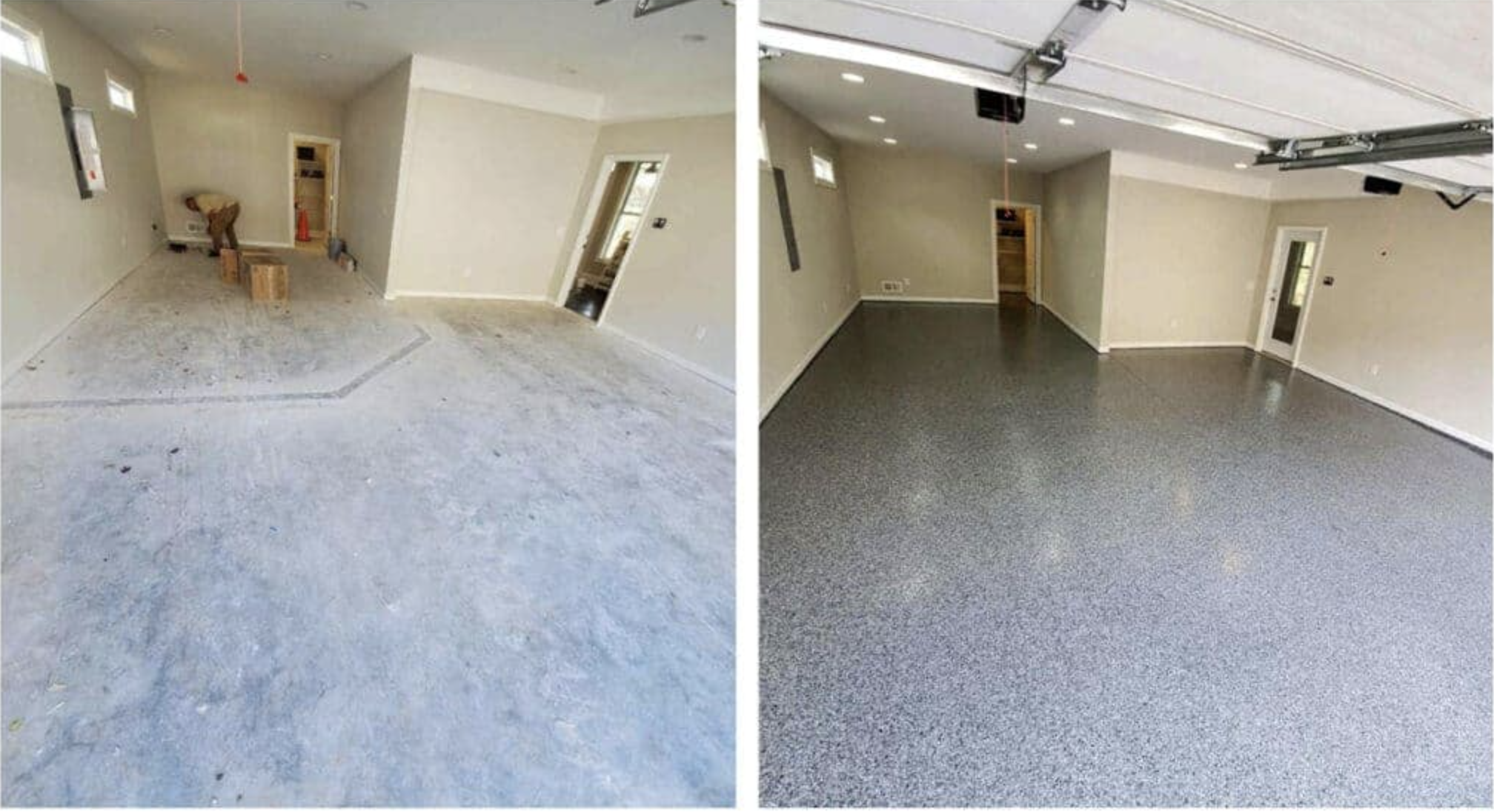
Same slab after grinding, priming, and a full rebuild.
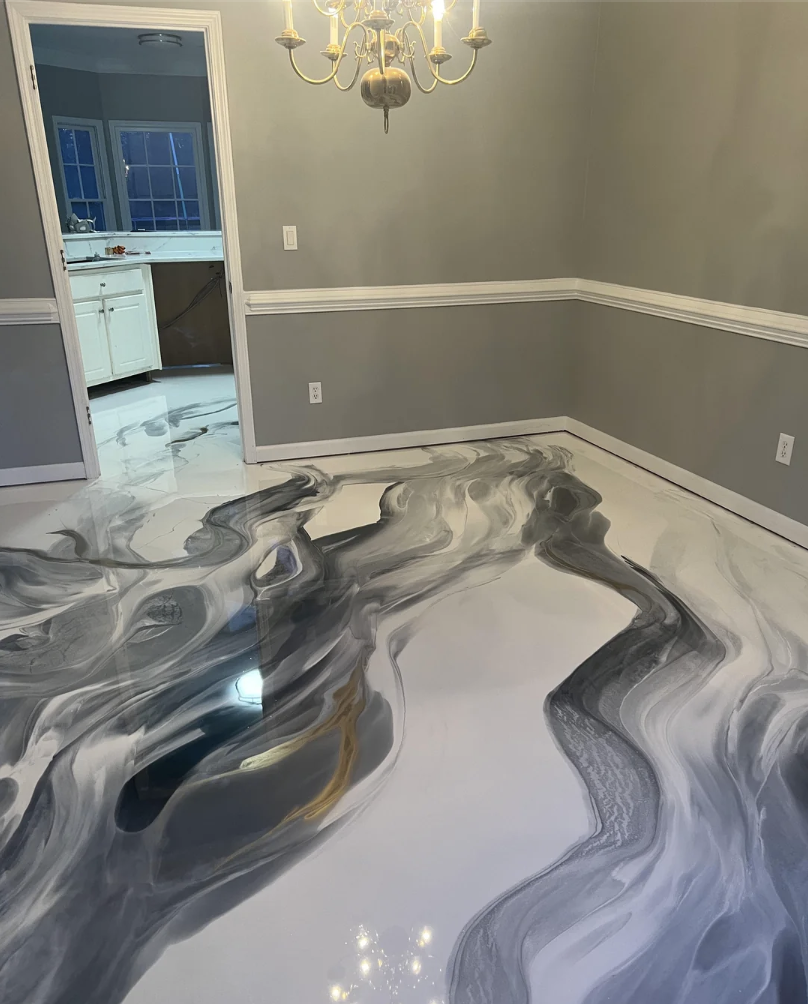
A polyaspartic topcoat is what survives hot tires.
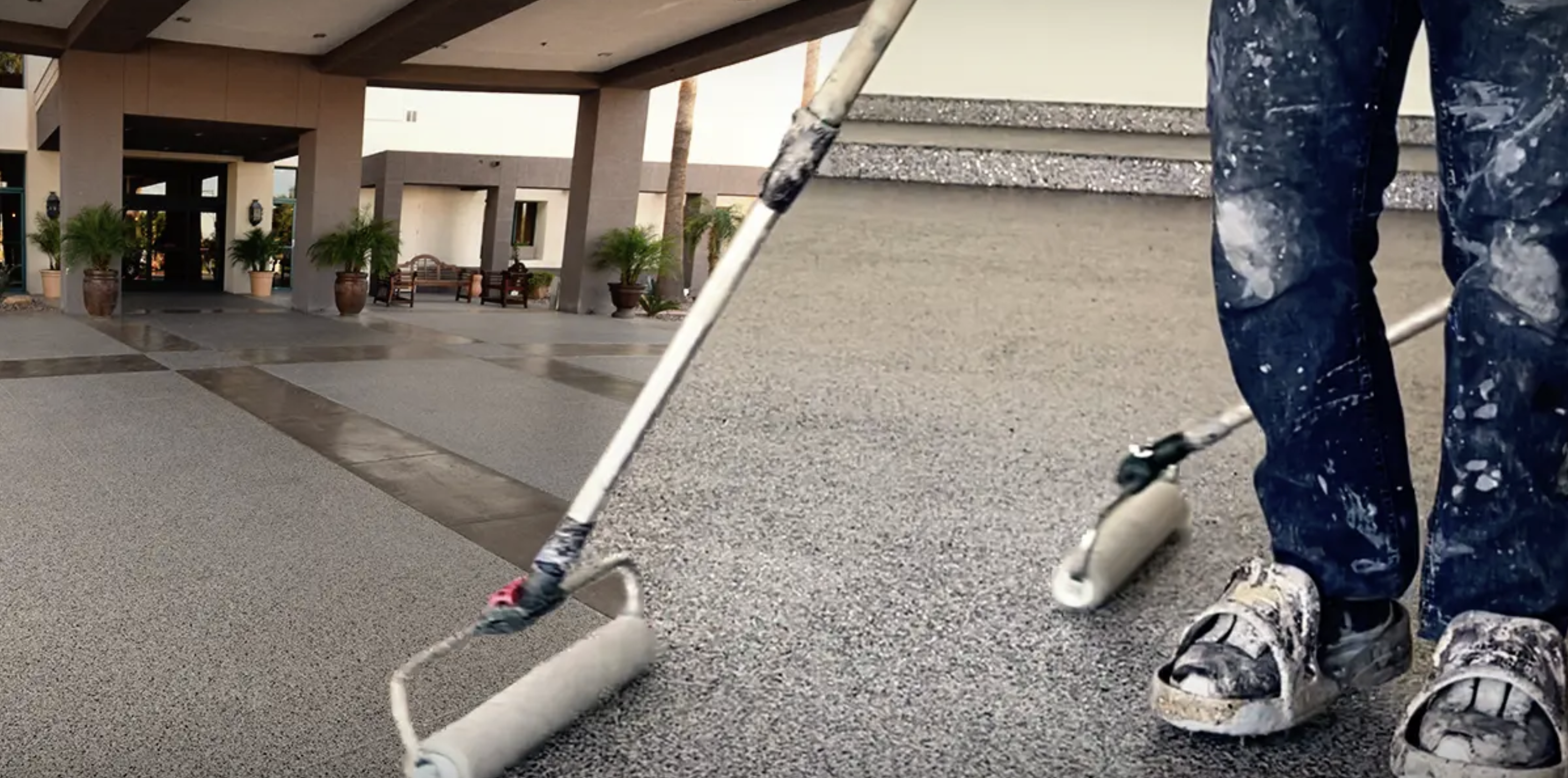
Commercial slabs get shot blasted rather than ground.
Frequently Asked Questions — Epoxy Floor Repair in Fayetteville, AR
Can you just recoat over my peeling epoxy floor?
No, and anyone who offers to is selling you the same failure again. A new coating is only as strong as what it sits on. If the existing epoxy is releasing from the slab, the old material has to come off by grinding before anything new goes down.
How much does epoxy floor repair cost in Fayetteville, AR?
Removing a failed coating adds $1.50 to $3.50 per square foot on top of the new floor. For a two-car garage in Fayetteville that usually means $600 to $1,400 in removal, then $1,600 to $2,900 for the replacement coating. Spot repairs on a floor that is mostly sound cost far less.
Why did my garage floor coating bubble instead of peel?
Bubbles usually mean moisture vapor pushing up through the slab, or the coating was applied while the concrete was still warming and outgassing. Both trap gas under the film. Grinding it off and installing a vapor-barrier primer is the fix; another coat on top will bubble the same way.
Can you repair an epoxy floor in winter in Northwest Arkansas?
Yes, with the right material. Standard epoxy needs slab temperatures around 55 to 60°F to cure properly, which rules out a lot of unheated Fayetteville garages from December through February. Polyaspartic and polyurea cure at far lower temperatures, so winter repairs get built on those instead.
Starting fresh instead? See garage floor epoxy in Fayetteville, or look at polished concrete if you would rather have no coating to fail again.